
The water moccasin, also known as the cottonmouth (Agkistrodon piscivorus), is one of the most recognized venomous snakes in the southeastern United States. Often misunderstood and feared, this semi-aquatic serpent plays a critical role in maintaining ecological balance by controlling populations of small mammals, fish, and amphibians. The water moccasin’s reputation as a dangerous snake is well-earned due to its potent venom and defensive behavior, yet many encounters are non-lethal and avoidable with proper awareness. This article explores the biology, behavior, habitat, diet, reproduction, and human interactions of the water moccasin, offering insights into its ecological importance, identification tips, safety measures, and conservation status. Understanding this snake not only mitigates fear but also fosters appreciation for its role in aquatic and riparian ecosystems.
1. Taxonomy and Identification
The water moccasin belongs to the Viperidae family, within the genus Agkistrodon, which also includes the copperhead (Agkistrodon contortrix). Its scientific name, Agkistrodon piscivorus, reflects its predatory nature: “piscivorus” means fish-eating, indicating the species’ affinity for aquatic prey. Adult water moccasins typically measure 2–4 feet in length, with some exceptional individuals reaching over 6 feet.
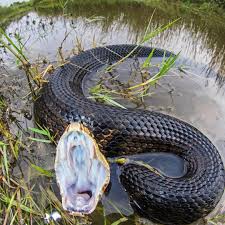
Identifying a water moccasin requires careful observation of physical features. They are thick-bodied, with a broad, triangular head and elliptical pupils — characteristics common to vipers. Their coloration varies by age, with juveniles exhibiting bright yellow tail tips used for luring prey, while adults have dark brown or olive coloration with faint crossbands. The inside of their mouth is white, giving rise to the name “cottonmouth,” which they display when threatened. Understanding these identifying features is crucial for distinguishing water moccasins from non-venomous snakes such as the northern water snake, which shares overlapping habitats.
2. Geographic Range and Habitat
Water moccasins are native to the southeastern United States, ranging from Texas and Florida northward to southern Illinois and southeastern Virginia. They are semi-aquatic and primarily inhabit swamps, marshes, rivers, ponds, lakes, and other freshwater environments. These snakes are highly adaptable and can also be found in urban areas near water sources.
Their preference for slow-moving or stagnant waters provides both hunting opportunities and protection from predators. Dense vegetation along water edges offers camouflage and facilitates ambush hunting. Seasonal behaviors often include basking on logs or rocks during cooler months and retreating into deeper water or burrows during extreme temperatures. Understanding habitat preferences is essential for predicting where water moccasins may be encountered and for implementing safety measures in shared environments.
3. Physical and Behavioral Characteristics
The water moccasin is a thick-bodied, muscular snake with a strong swimming ability, making it one of the most formidable aquatic snakes in North America. It exhibits defensive behavior such as gaping its mouth, coiling, vibrating its tail, and striking when threatened. Despite its aggressive reputation, the snake generally avoids confrontation, often retreating to water when disturbed.
Behavioral adaptations include nocturnal activity during warmer months and opportunistic feeding habits. Juveniles rely heavily on camouflage and tail luring to capture prey, while adults use ambush predation. Seasonal changes influence activity patterns; during colder months, water moccasins may enter hibernation in burrows, tree cavities, or underwater shelters. Observing these behavioral traits is essential for both appreciating the species and avoiding potentially dangerous encounters.
4. Diet and Hunting Strategies
Water moccasins are carnivorous predators with a varied diet that includes fish, amphibians, reptiles, small mammals, birds, and occasionally other snakes. Juveniles often begin hunting insects and amphibians before transitioning to larger prey as they mature.
The species is an ambush predator, relying on stealth and patience to capture prey. Its semi-aquatic lifestyle allows it to hunt in both water and along the shoreline. Using heat-sensitive pits located between the eyes and nostrils, water moccasins can detect warm-blooded prey even in low-light conditions. The venom of water moccasins immobilizes prey quickly, allowing efficient feeding without struggle. This predatory efficiency demonstrates their critical role in regulating populations of small animals in freshwater ecosystems.
5. Reproduction and Life Cycle
Water moccasins are ovoviviparous, giving birth to live young rather than laying eggs. Mating occurs in spring and early summer, and females give birth to 20–30 live offspring after a gestation period of approximately 3–4 months. Newborns are independent at birth and immediately begin hunting small prey such as frogs, fish, and insects.
Juvenile water moccasins have bright yellow tail tips that serve as lures to attract prey, an adaptation that disappears as the snake matures. Life expectancy in the wild ranges from 10 to 15 years, although many individuals fall victim to predators such as birds of prey, larger snakes, and humans. Understanding their reproductive habits is vital for conservation efforts and population monitoring.
6. Venom and Human Interaction
The water moccasin possesses potent hemotoxic venom, which destroys blood cells and tissue in prey. Bites to humans, while serious, are rarely fatal with prompt medical treatment. Symptoms of envenomation include pain, swelling, tissue necrosis, and in severe cases, systemic effects such as low blood pressure and nausea.
Human interactions often result from accidental encounters, especially near water or in recreational areas. Most bites occur when the snake is provoked or inadvertently stepped on. Preventative measures include wearing protective footwear, avoiding tall grasses or murky waters, and respecting the snake’s space. Education on snake behavior and first aid is crucial in areas where water moccasins are prevalent.
7. Predators and Ecological Role
Despite being apex predators in their habitats, water moccasins face predation from birds of prey, alligators, raccoons, and larger snakes. Their presence is essential for maintaining ecological balance, as they regulate populations of fish, amphibians, and small mammals.
By controlling prey populations, water moccasins indirectly influence plant growth, water quality, and ecosystem health. Removal or decline of this species can lead to overpopulation of prey species, resulting in ecological imbalance. Their role underscores the importance of coexistence and careful management in human-dominated landscapes.
8. Conservation Status and Threats
Water moccasins are currently not listed as endangered, but they face threats from habitat loss, pollution, and human persecution. Urbanization often encroaches on wetland habitats, reducing available hunting and breeding areas. Additionally, negative perceptions of the species lead to unnecessary killing.
Conservation strategies focus on habitat preservation, public education, and coexistence programs. Encouraging responsible land and water management ensures that both humans and water moccasins can share environments safely. Protecting wetlands not only benefits the snakes but also supports broader biodiversity and water quality.
9. Misidentification and Public Safety
Water moccasins are often misidentified as non-venomous snakes like northern water snakes or black rat snakes. While these species are harmless, their similar appearance can lead to unnecessary panic or snake killings.
Public safety campaigns emphasize proper identification, awareness of behavior (defensive vs. aggressive), and avoidance strategies. Understanding distinguishing features — such as the triangular head, dark mouth interior, and elliptical pupils — helps reduce human-snake conflicts and promotes coexistence.
10. Interesting Facts and Cultural Perception
The water moccasin has a unique place in American folklore and local culture. Often associated with danger and courage, it appears in stories, warning signs, and even local symbols. Despite its fearsome reputation, it is a remarkable example of evolutionary adaptation, combining aquatic agility, venomous defense, and effective hunting strategies.
Other fascinating facts include their ability to hibernate underwater, the use of tail-luring in juveniles, and their resilience to seasonal fluctuations. Educating the public on these traits can shift perceptions from fear to appreciation of this ecologically important species.
FAQ: Water Moccasin
1. What is a water moccasin?
A venomous snake native to the southeastern United States, also known as the cottonmouth (Agkistrodon piscivorus).
2. Where do water moccasins live?
They inhabit freshwater environments such as swamps, marshes, rivers, lakes, and ponds.
3. Are water moccasins dangerous to humans?
Yes, they are venomous, but bites are rarely fatal with proper medical treatment. Most bites occur due to accidental encounters or provocation.
4. How can I identify a water moccasin?
Look for a thick body, broad triangular head, dark olive-brown color with faint crossbands, and a white interior mouth. Juveniles have bright yellow tail tips.
5. What do water moccasins eat?
Their diet includes fish, amphibians, reptiles, small mammals, birds, and other snakes.
6. How can I stay safe around water moccasins?
Avoid tall grass, murky waters, and areas where snakes are likely to be basking. Wear protective footwear and never provoke a snake.
Conclusion
The water moccasin is a fascinating, ecologically important, and often misunderstood snake. Its venomous nature, aquatic lifestyle, and remarkable adaptations make it an integral part of southeastern U.S. ecosystems. While caution is warranted when encountering this species, understanding its behavior, habitat, and ecological role can reduce fear and foster coexistence. Protecting water moccasins and their habitats ensures that these iconic reptiles continue to thrive, maintaining balance in wetlands, rivers, and swamps while enriching the biodiversity of North American landscapes.
